|
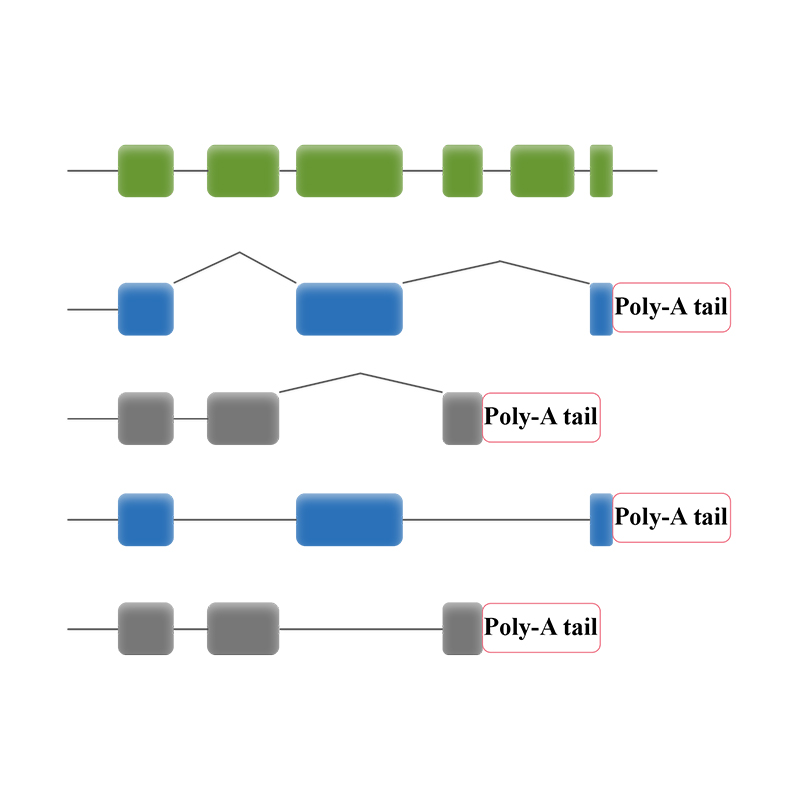
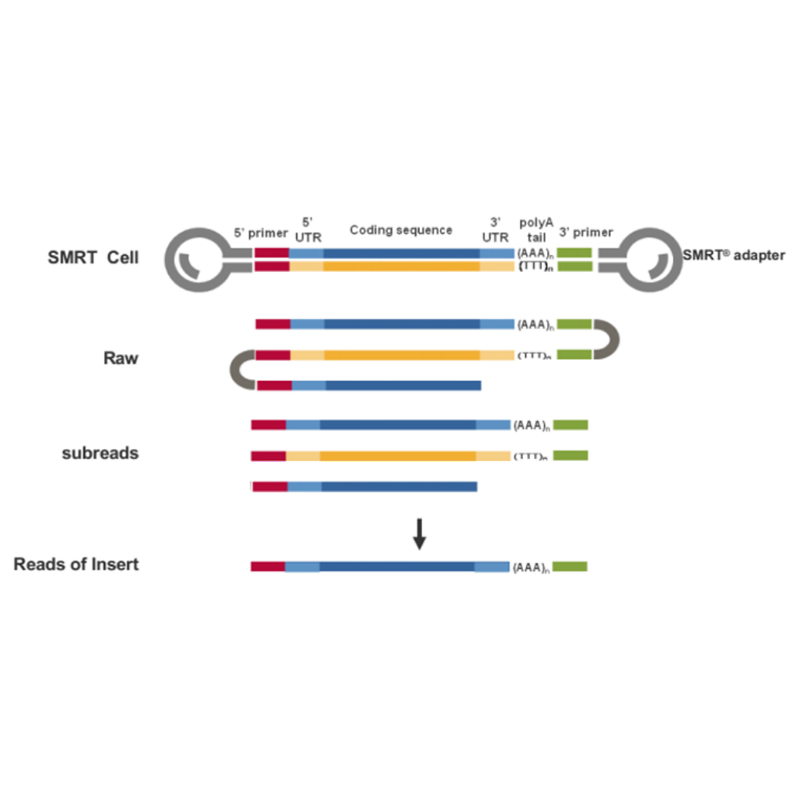
| While NGS-based mRNA sequencing is a versatile tool for quantifying gene expression, its reliance on short reads restricts its use in complex transcriptomic analyses. On the other hand, PacBio sequencing (Iso-Seq) employs long-read technology, enabling the sequencing of full-length mRNA transcripts. This approach facilitates a comprehensive exploration of alternative splicing, gene fusions, and poly-adenylation. However, there are other choices for gene expression quantification due to the high amount of data required. PacBio sequencing technology relies on single-molecule, real-time (SMRT) sequencing, providing a distinct advantage in capturing full-length mRNA transcripts. This innovative approach involves using zero-mode waveguides (ZMWs) and microfabricated wells that enable the real-time observation of DNA polymerase activity during sequencing. Within these ZMWs, PacBio’s DNA polymerase synthesizes a complementary strand of DNA, generating long reads that span the entirety of mRNA transcripts. PacBio operation in Circular Consensus sequencing (CCS) mode enhances accuracy by repeatedly sequencing the same molecule. The generated HiFi reads have an accuracy comparable to NGS, further contributing to a comprehensive and reliable analysis of complex transcriptomic features.
Platform: PacBio Sequel II; PacBio Revio 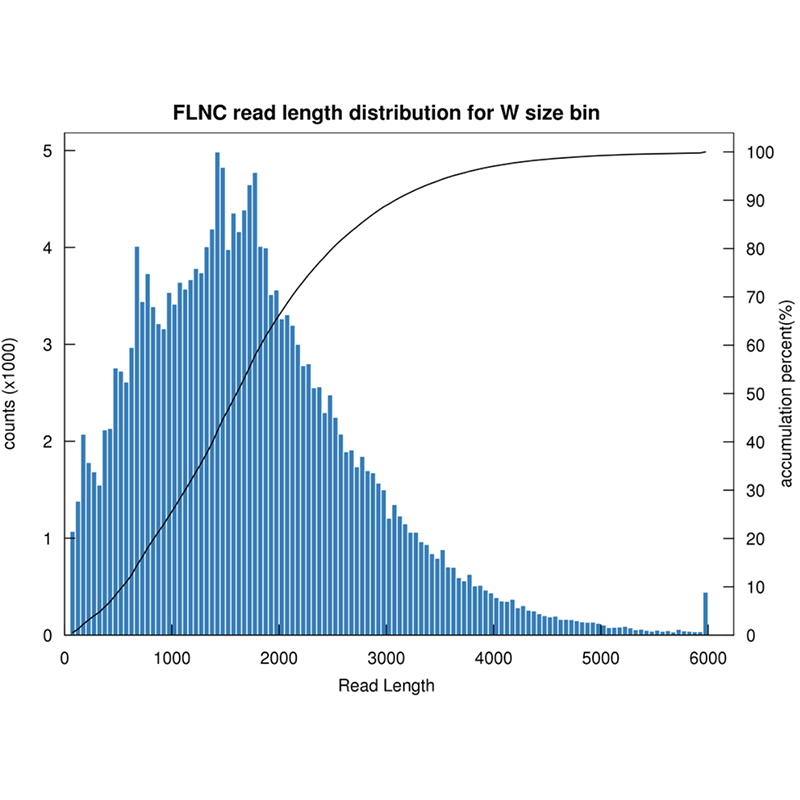 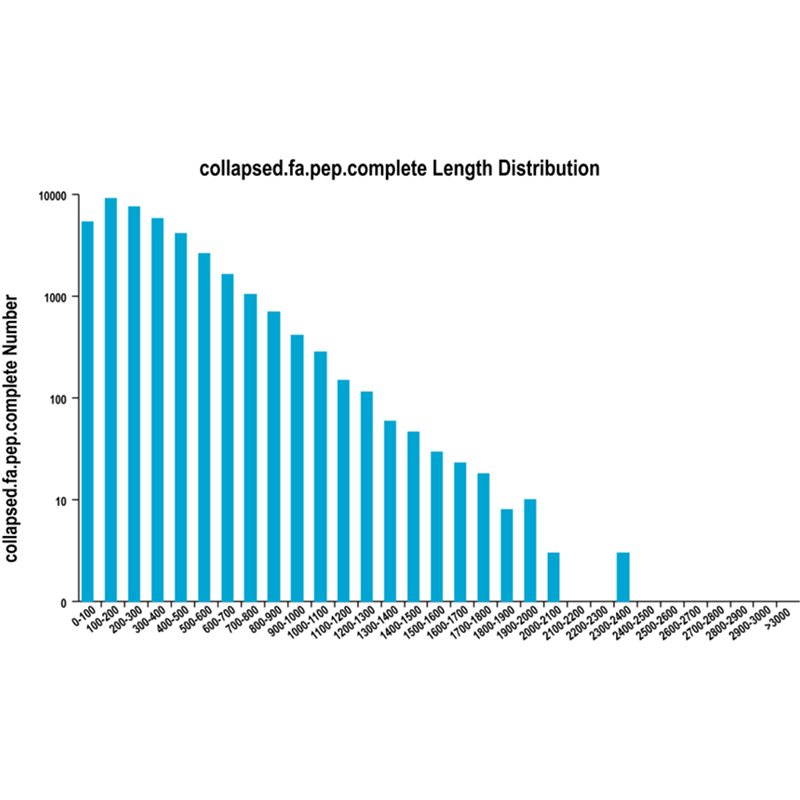 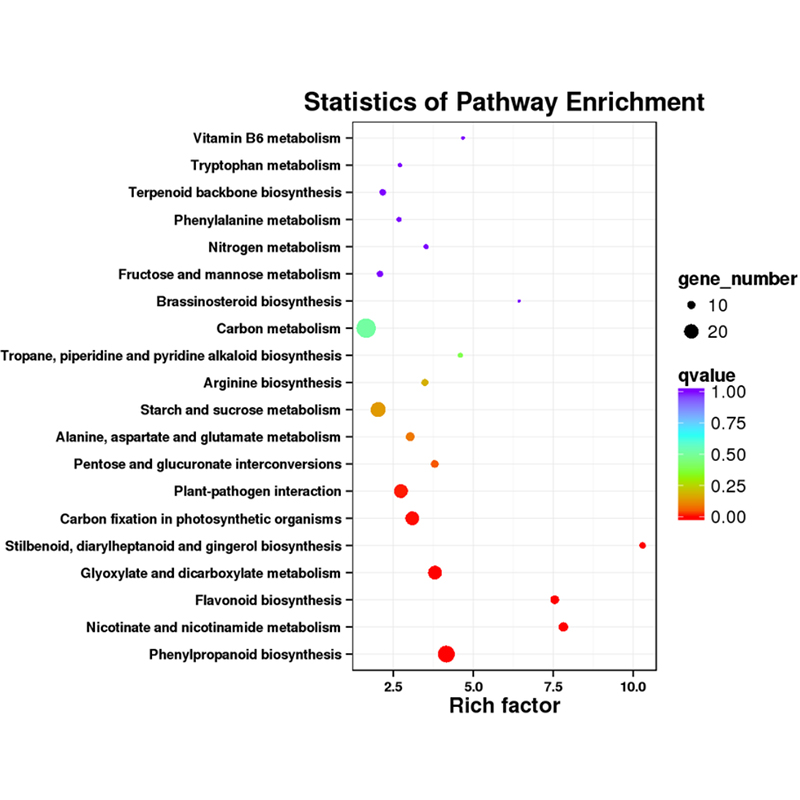
|
| Service Details |
Features
- cDNA synthesis from poly-A mRNA followed by library preparation
- Sequencing in CCS mode, generating HiFi reads
- Sequencing of the full-length transcripts
- The analysis does not necessitate a reference genome; however, it may be employed
- Bioinformatic analysis enables analysis of transcripts isoform lncRNA, gene fusions, poly-adenylation, and gene structure |
|
Service Advantages
- Q High Accuracy: HiFi reads with accuracy >99.9% (Q30), comparable to NGS
- Alternative Splicing Analysis: sequencing of the entire transcripts enables isoform identification and characterization
- Extensive Expertise: with a track record of completing over 1100 PacBio full-length transcriptome projects and processing over 2300 samples, our team brings a wealth of experience to every project.
- Post-Sales Support: our commitment extends beyond project completion with a 3-month after-sale service period. During this time, we offer project follow-up, troubleshooting assistance, and Q&A sessions to address any queries related to the results. |
|
Sample Requirements and Delivery
| Library | Sequencing strategy
| Data recommended | Quality Control | | PolyA enriched mRNA CCS library | PacBio Sequel II
PacBio Revio | 20/40 Gb
5/10 M CCS | Q30≥85% |
|
|
Sample Requirements:
Nucleotides:
- Plants:
- Root, Stem or Petal: 450 mg
- Leaf or Seed: 300 mg
- Fruit: 1.2 g
- Animal:
- HEart or Intestine: 300 mg
- Viscera or Brain: 240 mg
- Muscle: 450 mg
- Bones, Hair or Skin: 1g
- Arthropods:
- Insects: 6g
- Crustacea: 300 mg
- Whole blood: 1 tube
- Cells: 106 cells
| Conc.(ng/μl) | Amount (μg) | Purity | Integrity | | ≥ 100 | ≥ 1.0 | OD260/280=1.7-2.5
OD260/230=0.5-2.5
Limited or no protein or DNA contamination shown on gel. | For plants: RIN≥7.5;
For animals: RIN≥8.0;
5.0≥ 28S/18S≥1.0;
limited or no baseline elevation
|
Recommended Sample Delivery Container: 2 ml centrifuge tube (Tin foil is not recommended)
Sample labeling: Group+replicate e.g. A1, A2, A3; B1, B2, B3.
Shipment: 1. Dry-ice: Samples need to be packed in bags and buried in dry-ice.
2. RNAstable tubes: RNA samples can be dried in RNA stabilization tube(e.g. RNAstable®) and shipped in room temperature. |
|
Service Work Flow
 |  |  |  |  |  |  | | Experiment design | Sample delivery | RNA extraction | Library construction | Sequencing | Data analysis | After-sale services |
|
| Bioinformatics |
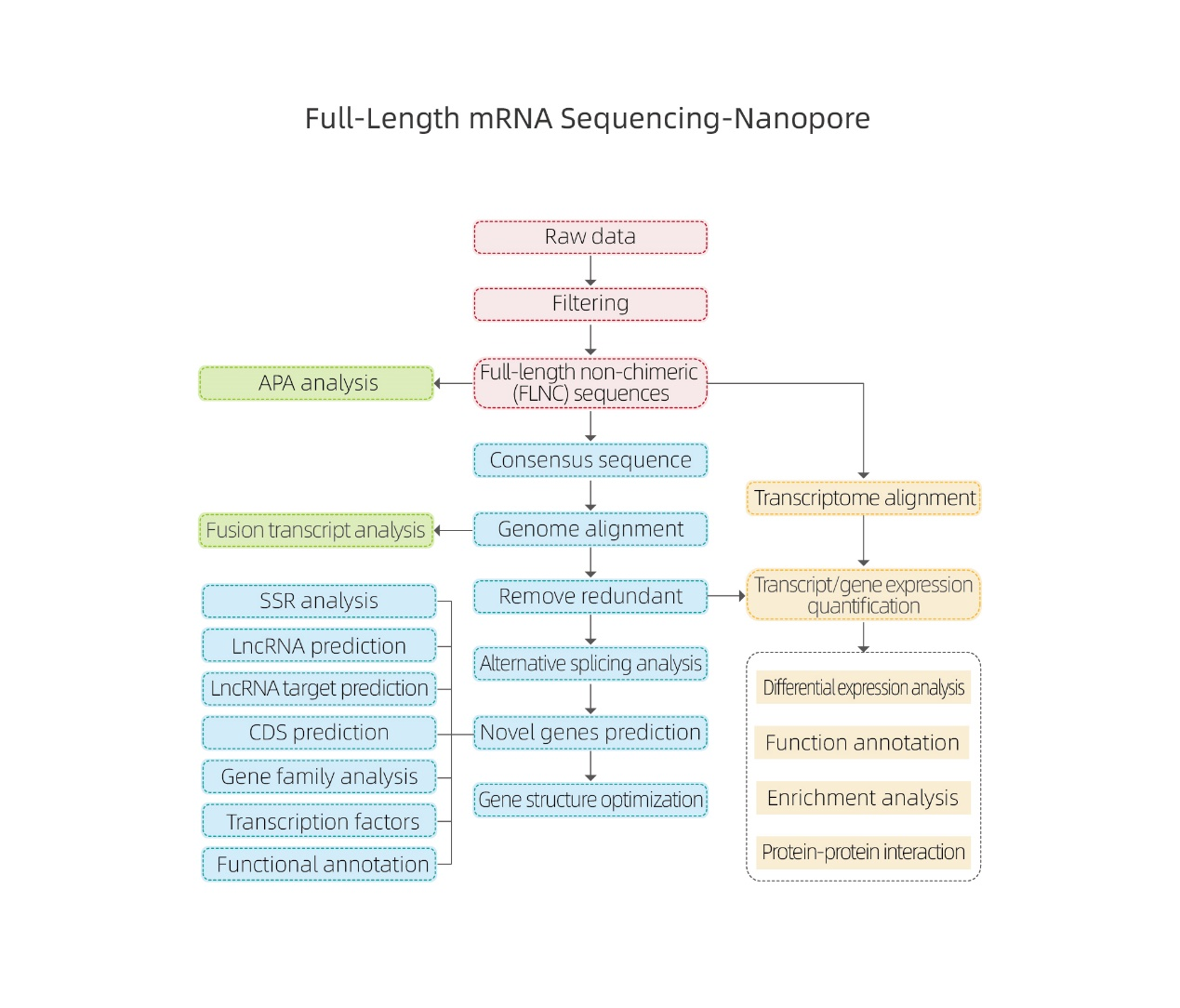
- Raw data processing
- Transcript identification
- Alternative splicing
- Expression quantification in gene level and isoform level
- Differential expression analysis
- Function annotation and enrichment (DEGs and DETs)
|
| Demo Results |
Alternative splicing analysis

Alternative Polyadenylation Analysis (APA) 
lncRNA prediction 
Annotation of novel genes 
Clustering of DETs 
Protein-Protein Networks in DEGs 
|
| Featured Publications |
Explore the advancements facilitated by BMKGene’s Nanopore full-length mRNA sequencing services through a curated collection of publications.
Gong, B. et al. (2023) ‘Epigenetic and transcriptional activation of the secretory kinase FAM20C as an oncogene in glioma’, Journal of Genetics and Genomics, 50(6), pp. 422–433. doi: 10.1016/J.JGG.2023.01.008.
He, Z. et al. (2023) ‘Full-length transcriptome sequencing of lymphocytes respond to IFN-γ reveals a Th1-skewed immune response in flounder (Paralichthys olivaceus)’, Fish & Shellfish Immunology, 134, p. 108636. doi: 10.1016/J.FSI.2023.108636.
Ma, Y. et al. (2023) ‘Comparative analysis of PacBio and ONT RNA sequencing methods for Nemopilema Nomurai venom identification’, Genomics, 115(6), p. 110709. doi: 10.1016/J.YGENO.2023.110709.
Yu, D. et al. (2023) ‘Nano-seq analysis reveals different functional tendency between exosomes and microvesicles derived from hUMSC’, Stem Cell Research and Therapy, 14(1), pp. 1–13. doi: 10.1186/S13287-023-03491-5/TABLES/6.
|
|
