


Products
Biochemical Reagents
Vitamins
SKU : GC301015-25g
หมวดหมู่ : Biochemicals , 1. Chemical and Reagents , Buffers , Servicebio ,
แบรนด์ : Servicebio
Share
Product Information
Product Name | Cat. No. | Spec. |
Vitamin C | GC301015-25g | 25 g |
Introduction
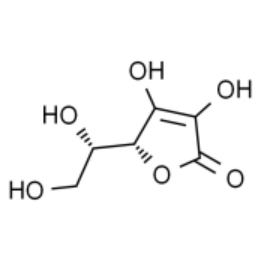
Vitamin C, also known as vitamin C, is a polyhydroxy compound with the chemical formula C6H8O6. Its structure is similar to glucose, and the two adjacent enol hydroxyl groups in the second and third positions of the molecule are easily dissociated to release H+, so it has the nature of acid, also known as L-ascorbic acid. Vitamin C has strong reducibility and is easily oxidized to dehydrovitamin C, but its reaction is reversible, and ascorbic acid and dehydroascorbic acid have the same physiological function, but if dehydroascorbic acid is further hydrolyzed to produce diketogualoic acid, the reaction is irreversible and the physiological efficacy is completely lost.
Vitamin C is an acidic white crystalline or crystalline powder. It is easily oxidized and turns yellow in humid air. 1 g of this product is soluble in about 3mL water, 30mL ethanol, 50mL absolute ethanol and 100mL glycerol, but insoluble in diethyl ether, benzene, trichloromethane, petroleum ether, oils and fats. Vitamin C is flammable and burns to produce irritating fumes.
Basic Attributes
Name | Vitamin C |
Synonym | L-ascorbic acid, Anti bad blood factor, Vitamin C, Vitamin C; Vitamin C; Vitamin C, Antiscorbutic factor, L-Threoascorbic acid |
CAS | 50-81-7 |
Molecular formula | C6H8O6 |
Molecular mass | 176.12 |
Purity | 99% |
Appearance (character) | White powder |
Storage conditions | 2-8 |
Unit | Bottle |
Spec. | 25 g |
Pubchem CID | 54670067 |
MDL No. | MFCD00064328 |
EC No. | 200-066-2 |
Related categories | Vitamin |
Solubility | 100mg/mL in water |
Molecular Structural
Instructions
Vitamin C is necessary for antibodies and collagen formation, tissue repair (including some REDOX role), metabolism of phenylalanine, tyrosine, folic acid, iron, carbohydrate, fat, and synthesis of protein, maintain immune function, hydroxyl serotonin, full blood vessels, promoting the heme iron absorption. At the same time vitamin C also has the function of resist oxidation and free radicals, inhibiting the formation of tyrosinase, so as to achieve whitening, light spot effect.
In the human body, vitamin C is a potent antioxidant that is used to reduce oxidative stress caused by ascorbate peroxidase SCH. Vitamin C is also involved in many important biosynthetic processes. Since most mammals can synthesize vitamin C in their livers, there is no question of deficiency, but a few animals, such as humans, primates and woodchucks, cannot synthesize it themselves and must ingests it through food and drugs. Vitamin C can be either oxidized or reduced in the body, so it can be used as a hydrogen donor or a hydrogen acceptor, playing an important role in the REDOX process in the body.
Note:
Vitamin C is taken on an empty stomach, but it is best to pay attention to the patient with gastrointestinal ulcer with caution, so as not to stimulate the ulcer surface, resulting in ulcer deterioration, bleeding or perforation. People with poor renal function should not take more Vitamin C. If people with poor renal function take vitamin C for a long time, it may cause excessive gastric acid, gastric juice reflux, and even urinary calculi. In particular, people with kidney deficits should take less Vitamin C. This is because excess vitamin C can be excreted in the urine. Before that, however, it changes first in the kidneys and then is excreted. High doses of vitamin C can put a strain on the kidneys. This will lead to kidney disease patients with excessive burden and even weaker kidneys.
After taking a large amount of vitamin C, do not stop the drug suddenly. If the drug is stopped suddenly, it will cause withdrawal reaction, make the symptoms worsen or relapse, and should be gradually reduced until the drug is completely stopped. Vitamin C should not be used with isoniazid, aminophylline, streptomycin, penicillin and sulfonamides. Otherwise, will make the above drugs because of acidic environment and the efficacy is reduced or ineffective.
Vitamin C has a destructive effect on vitamin B12, especially when taken in large amounts, and promotes the excretion of vitamin B12 and folic acid in the body. So while taking lots of vitamin C, be sure to take enough of these two vitamins. The combination of vitamin C and aspirin enteric-coated tablets may accelerate its excretion and reduce its efficacy. Do not take ginseng while taking vitamin C. The combination of vitamin C and folic acid also attenuates their respective effects. If the treatment of anemia must be used, vitamin C can be used intermittently, not at the same time.
Vitamin C is lost from taking drugs. If you take medicine without your doctor's permission, it will not only damage your health, but also cause the loss of vitamin C in your body. Vitamin C tablets should be kept away from light in a cool place to prevent deterioration and failure. Don't take a lot of vitamin C. Large amounts of vitamin C are not toxic. However, excessive doses can cause diarrhea, excessive urination, kidney stones, and skin rashes. If excessive use causes symptoms such as stomach upset, pantothenic acid, diarrhea, nausea and vomiting, you should reduce the dosage or stop taking it temporarily.
Eye contact: Rinse eyes with water as a precaution.
Ingestion: Never feed anything from the mouth to an unconscious person. Rinse your mouth with water.
Security Information
WGK | 1 |
Note: The product may be optimized and upgraded. The actual label information prevails.
For Research Use Only!


