| The development of single-cell capture and custom library construction techniques, coupled with high-throughput sequencing, has revolutionized gene expression studies at the cell level. This breakthrough allows for deeper and more comprehensive analysis of complex cell populations, overcoming the limitations associated with averaging gene expression over all cells and preserving the true heterogeneity within these populations. While single-cell RNA sequencing (scRNA-seq) has undeniable advantages, it encounters challenges in certain tissues where the creation of a single-cell suspension proves difficult and requires fresh samples. At BMKGene, we address this hurdle by offering single-nucleus RNA sequencing (snRNA-seq) using the state-of-the-art 10X Genomics Chromium technology. This approach broadens the spectrum of samples amenable to transcriptome analysis at the single-cell level.
| ||||||||||||
| Service Details | |||||||||||||
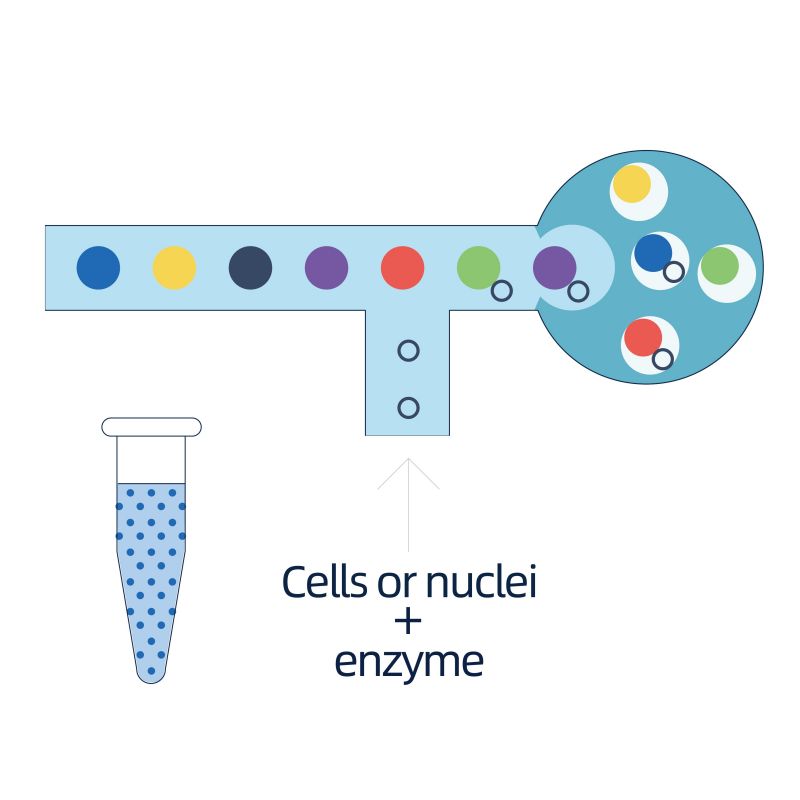
The isolation of nuclei is achieved by 10× Genomics Chromium™, which consists eight-channel microfluidics system with double crossings. In this system, a gel beads with barcodes and primer, enzymes and a single nucleus are encapsulated in nanoliter-sized oil drop, generating Gel Bead-in-Emulsion (GEM). Once GEM are formed, cell lysis and release of barcodes are performed in each GEM. mRNA are reverse transcribed into cDNA molecules with 10× barcodes and UMI, which are further subject to standard sequencing library construction.
| |||||||||||||
- Preparation of single-nuclei suspension from frozen tissues - poly(dT) tail for mRNA priming and cDNA synthesis, | |||||||||||||
Single-nucleus RNA sequencing circumvents the limitations of single-cell RNA sequencing, enabling: - The use of frozen samples and not only limited to fresh samples | |||||||||||||
| |||||||||||||
| |||||||||||||
| |||||||||||||
| |||||||||||||
| Bioinformatics | |||||||||||||
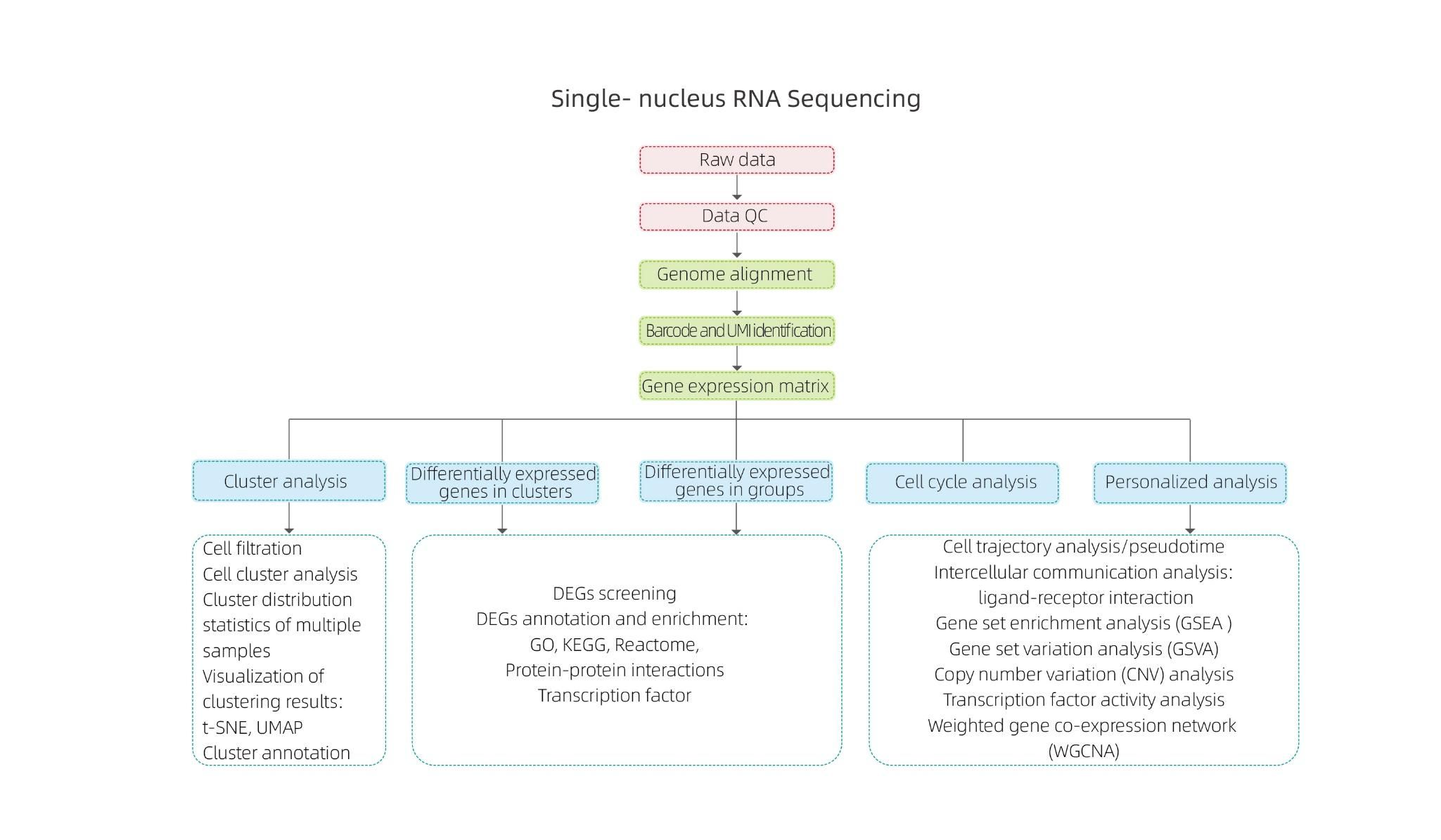 Includes the following analysis: Cell clustering and cluster annotation
- Combination of data
- Cell cycle analysis | |||||||||||||
| Demo Results | |||||||||||||
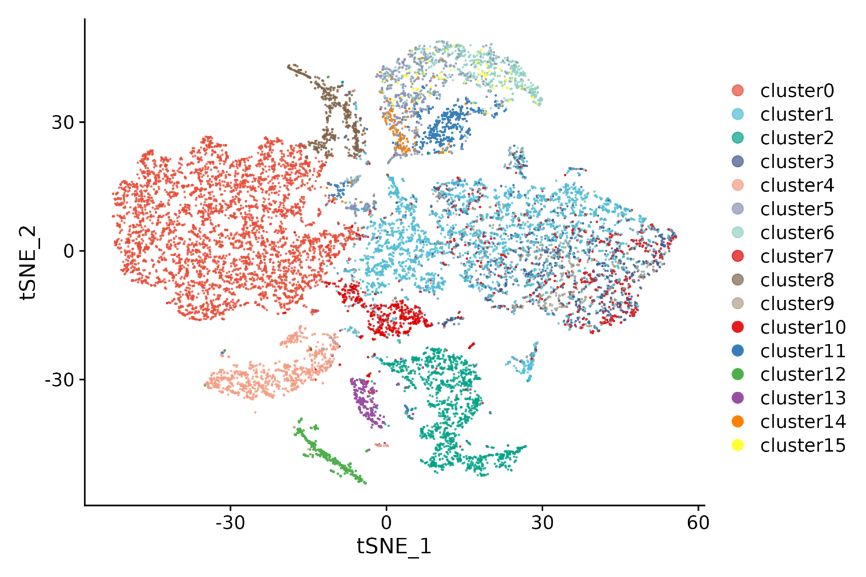
Cell clustering:
Differential Expression Analysis: cluster DEGs
| |||||||||||||
| |||||||||||||
Advanced Analysis: Pseudotime analysis: 
Cell cycle analysis:
| |||||||||||||
| Featured Publications | |||||||||||||
Explore the advancements facilitated by BMKGene’s single-nucleus RNA sequencing services by 10X Chromium in these featured publications: Wang, L. et al. (2021) ‘Single-cell transcriptomic analysis reveals the immune landscape of lung in steroid-resistant asthma exacerbation’, Proceedings of the National Academy of Sciences of the United States of America, 118(2), p. e2005590118. doi: 10.1073/pnas.2005590118 Zheng, H. et al. (2022) ‘A Global Regulatory Network for Dysregulated Gene Expression and Abnormal Metabolic Signaling in Immune Cells in the Microenvironment of Graves’ Disease and Hashimoto’s Thyroiditis’, Frontiers in Immunology, 13, p. 879824. doi: 10.3389/FIMMU.2022.879824/BIBTEX. Tian, H. et al. (2023) ‘Single-cell transcriptome uncovers heterogeneity and immune responses of leukocytes after vaccination with inactivated Edwardsiella tarda in flounder (Paralichthys olivaceus)’, Aquaculture, 566, p. 739238. doi: 10.1016/J.AQUACULTURE.2023.739238. Yu, Y. et al. (2023) ‘Photodynamic therapy improves the outcome of immune checkpoint inhibitors via remodelling anti-tumour immunity in patients with gastric cancer’, Gastric Cancer, 26(5), pp. 798–813. doi: 10.1007/S10120-023-01409-X/METRICS. | |||||||||||||
Reference (n.) https://www.bmkgene.com/single-nucleus-rna-sequencing-product/