Exosomes are small vesicles secreted by cells, typically ranging in diameter from 30 to 100 nanometers. These vesicles contain various RNA. Among the RNA types in exosomes, the most common and extensively studied is microRNA (miRNA). miRNA is a class of non-coding small RNAs approximately 18-25 nucleotides in length. They mediate post-transcriptional gene silencing by binding to the 3′ untranslated region (3′ UTR) of target mRNAs, thereby regulating gene expression. For example, exosomes secreted by certain tumor cells contain specific miRNAs, such as miR-126 and miR-92a. These miRNAs can influence gene expression in recipient cells and promote tumor angiogenesis (Tomohiro Umezu, et al., Oncogene, 2012).
| |||||||||||||||
| Service Details | |||||||||||||||
- Exosomal total RNA is used as input material. During purification, miRNA Beads are employed to isolate miRNA. | |||||||||||||||
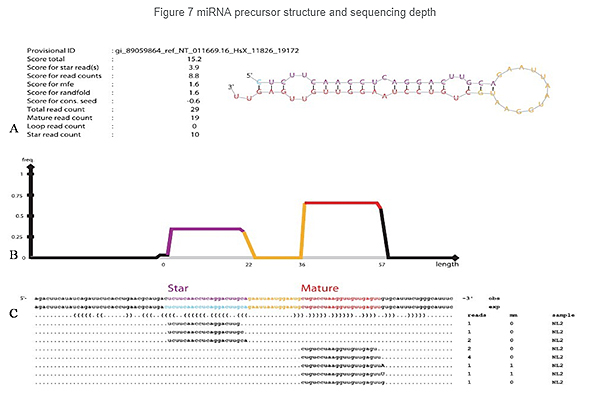
- Comprehensive bioinformatics analysis: Enabling the identification of both known and novel miRNAs, identification of miRNAs targets, and corresponding functional annotation and enrichment with multiple databases (KEGG, GO). | |||||||||||||||
| |||||||||||||||
Recommended Sample Delivery | |||||||||||||||
| |||||||||||||||
| Bioinformatics | |||||||||||||||
- Raw data quality control | |||||||||||||||
| Demo Results | |||||||||||||||
Differential expression of miRNA – hiearchical clustering
Functional annotation of target of differentially expressed miRNAs
| |||||||||||||||
Reference (n.) https://www.bmkgene.com/exosomal-small-rna-sequencing-illumina-product/